Res
Latin · rēs · /reːs/ · n. fem.
One's affairs, matters, concerns.
A personal framework for managing thought, beliefs, goals, tasks, and time — built on a defined model.
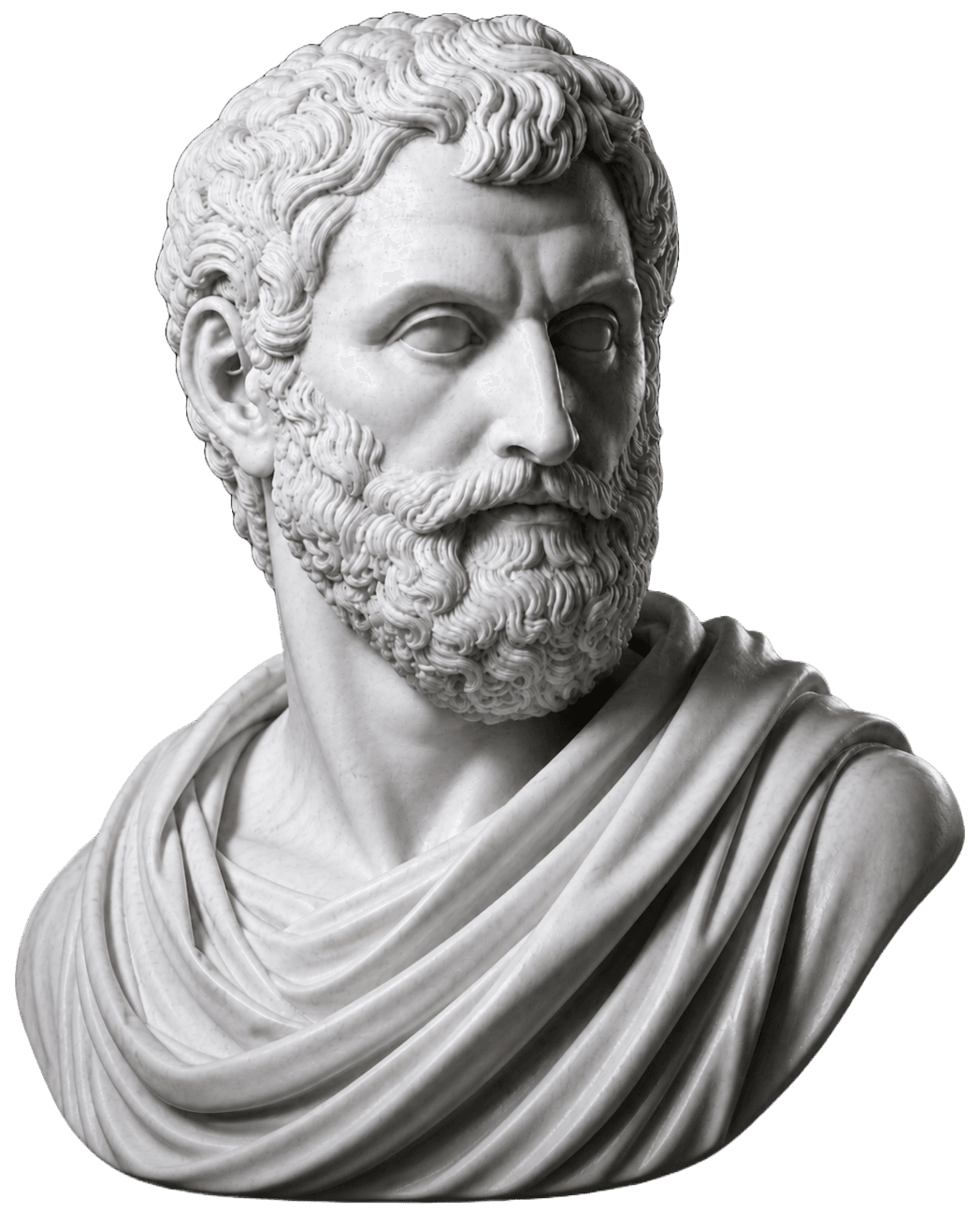
Thales of Miletus · c. 624 - c. 546 BC
The case for Res
The case for Res
“Either do, or despair.”
I
Why this exists
II
Freedom as the aim
III
A model for man
IV
A model of reality
V
From model to system
The lineage
The lineage
“If I have seen further, it is by standing on the shoulders of giants.”
“The most difficult thing is to know oneself.”
Diogenes Laërtius, Lives I
“Hope is the only good that is common to all men.”
Diogenes Laërtius, Lives I
“The unexamined life is not worth living.”
Plato, Apology 38a
“There is only one good, knowledge, and one evil, ignorance.”
Diogenes Laërtius, Lives II
“The beginning is the most important part of every work.”
Republic II, 377a
“Truth is the beginning of every good thing.”
Laws V, 730c
“All men by nature desire to know.”
Metaphysics I.1
“The educated differ from the uneducated as much as the living from the dead.”
Diogenes Laërtius, Lives V
“We have two ears and one mouth, that we may listen more and speak less.”
Diogenes Laërtius, Lives VII
“Better to trip with the feet than with the tongue.”
Diogenes Laërtius, Lives VII
“Waste no more time arguing what a good man should be. Be one.”
Meditations X.16
“Confine yourself to the present.”
Meditations VII.29
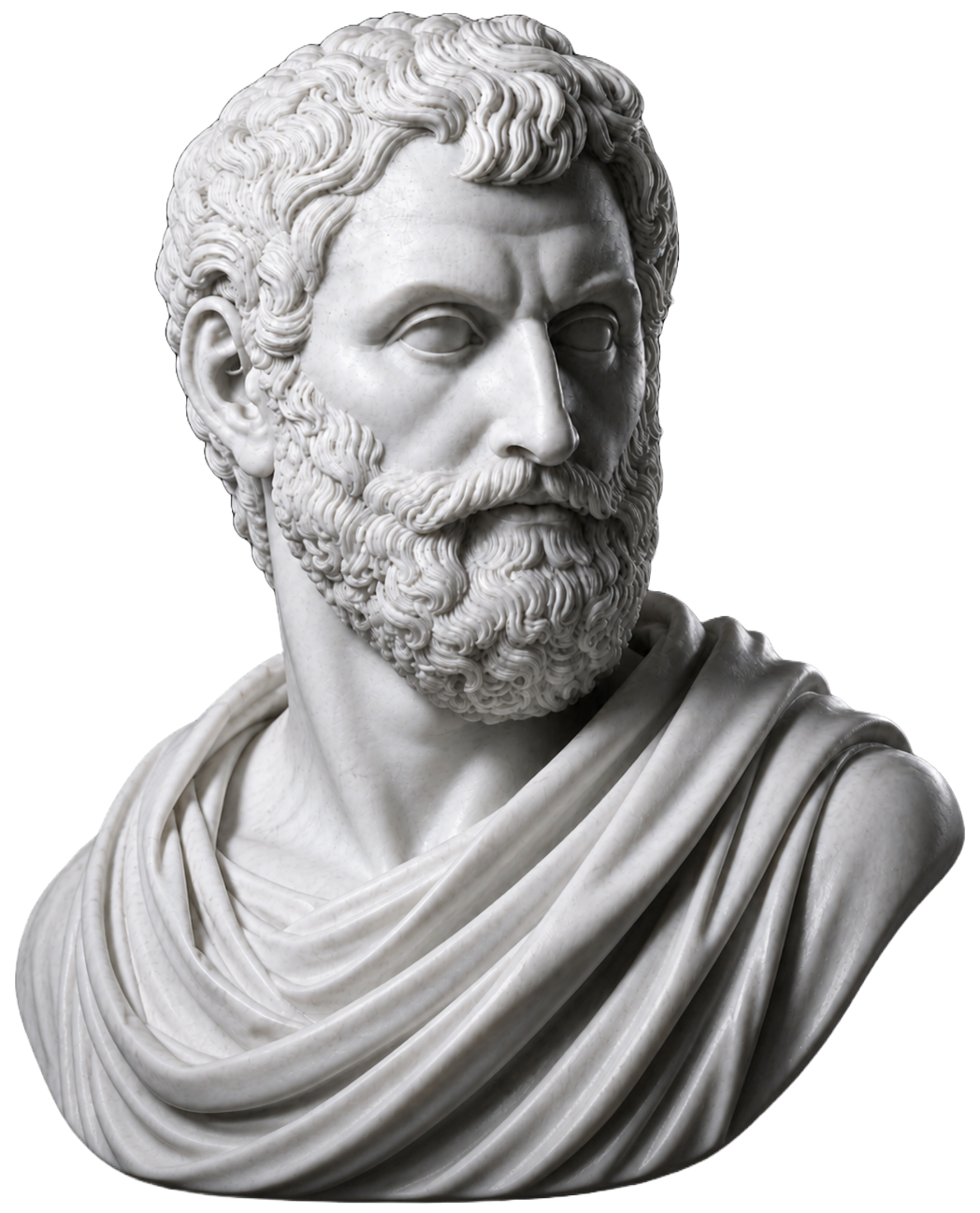
Thales of Miletus
c. 624 – c. 546 BC
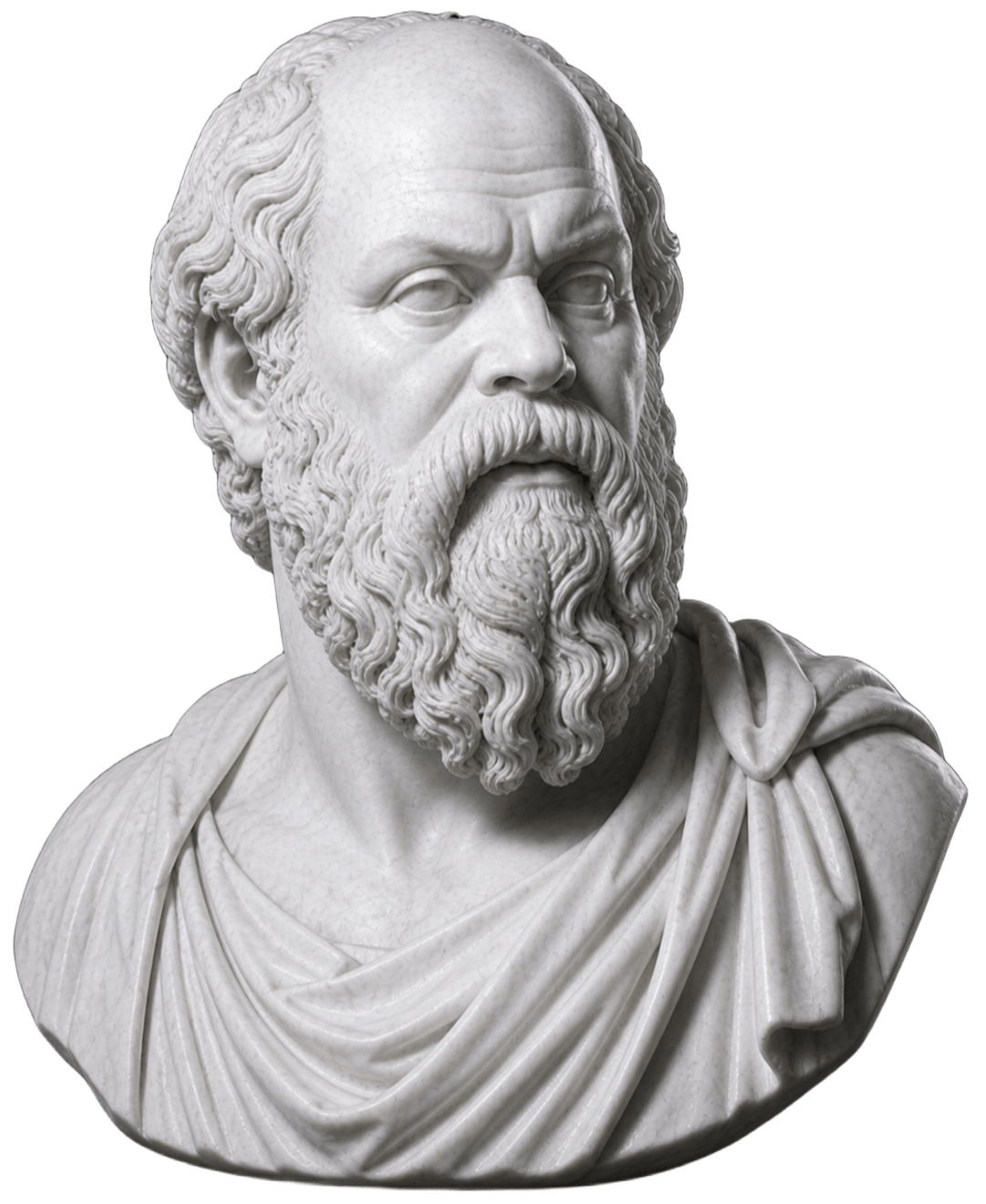
Socrates
c. 470 – 399 BC
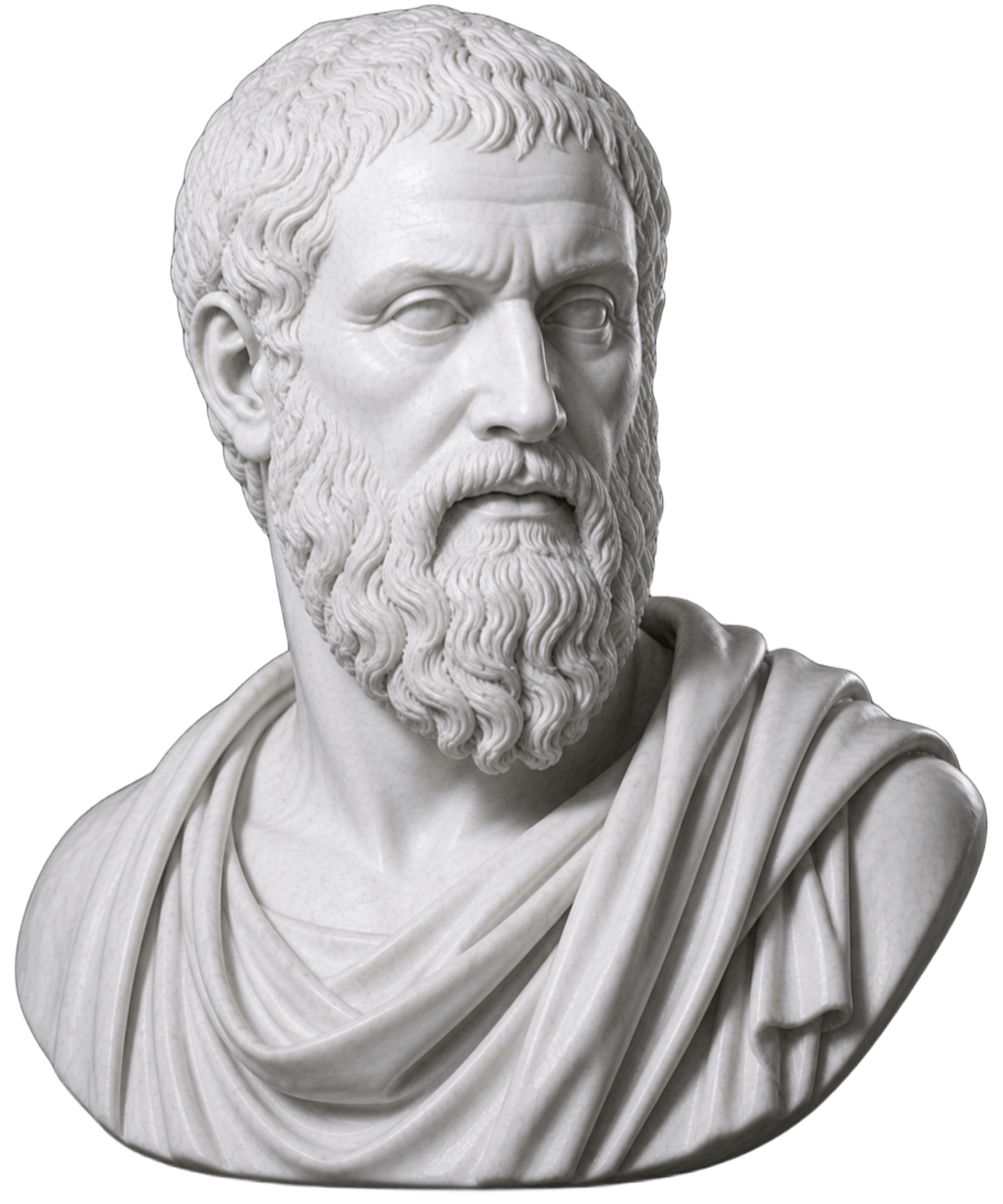
Plato
c. 428 – 348 BC
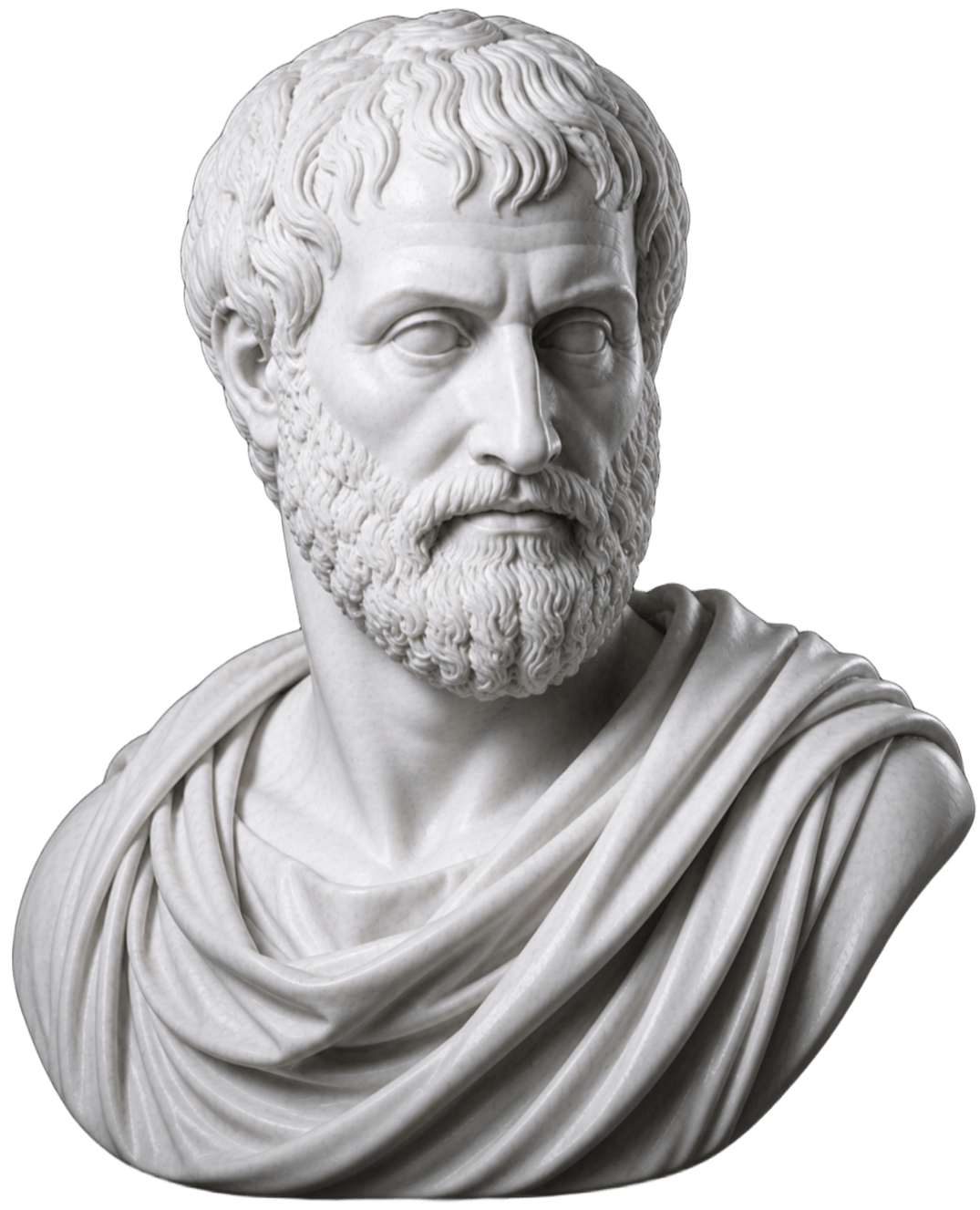
Aristotle
384 – 322 BC
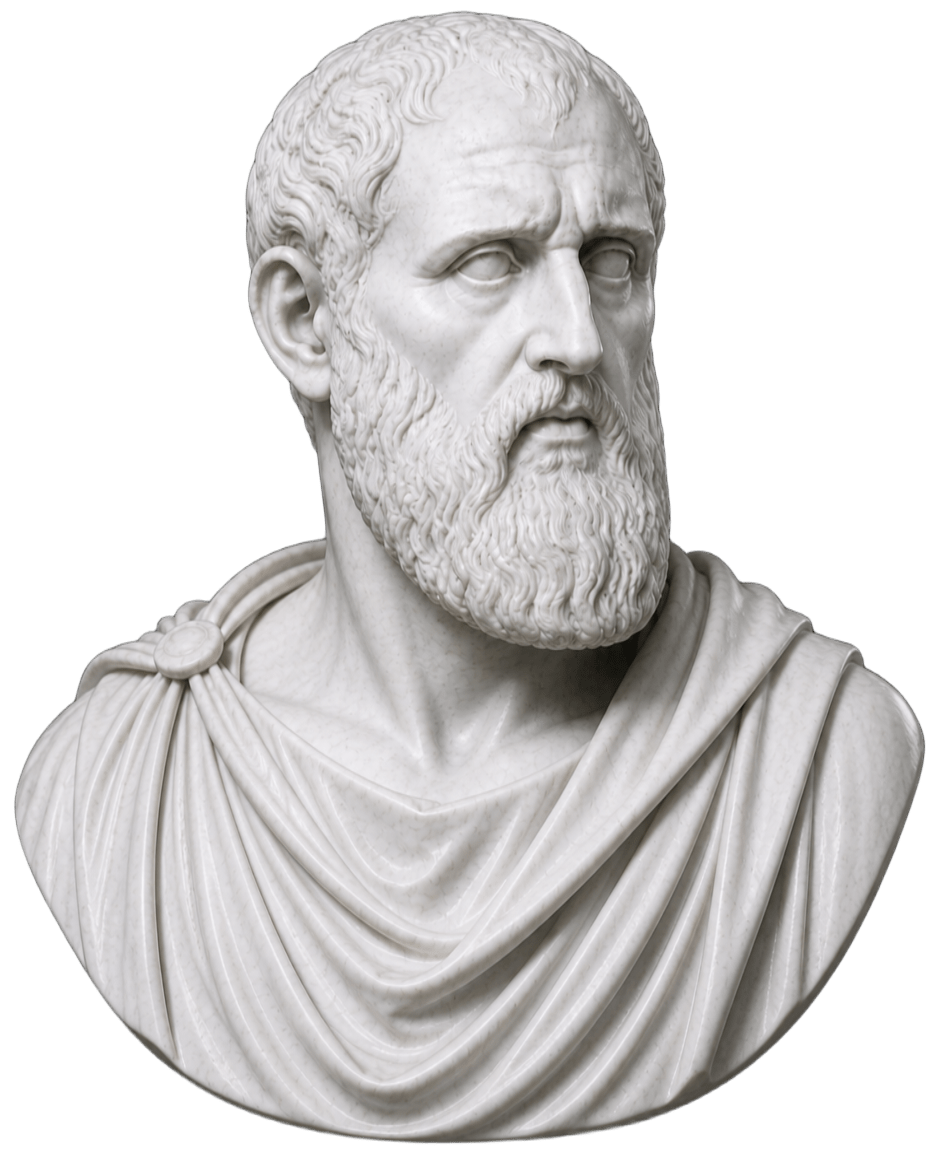
Zeno of Citium
c. 334 – c. 262 BC
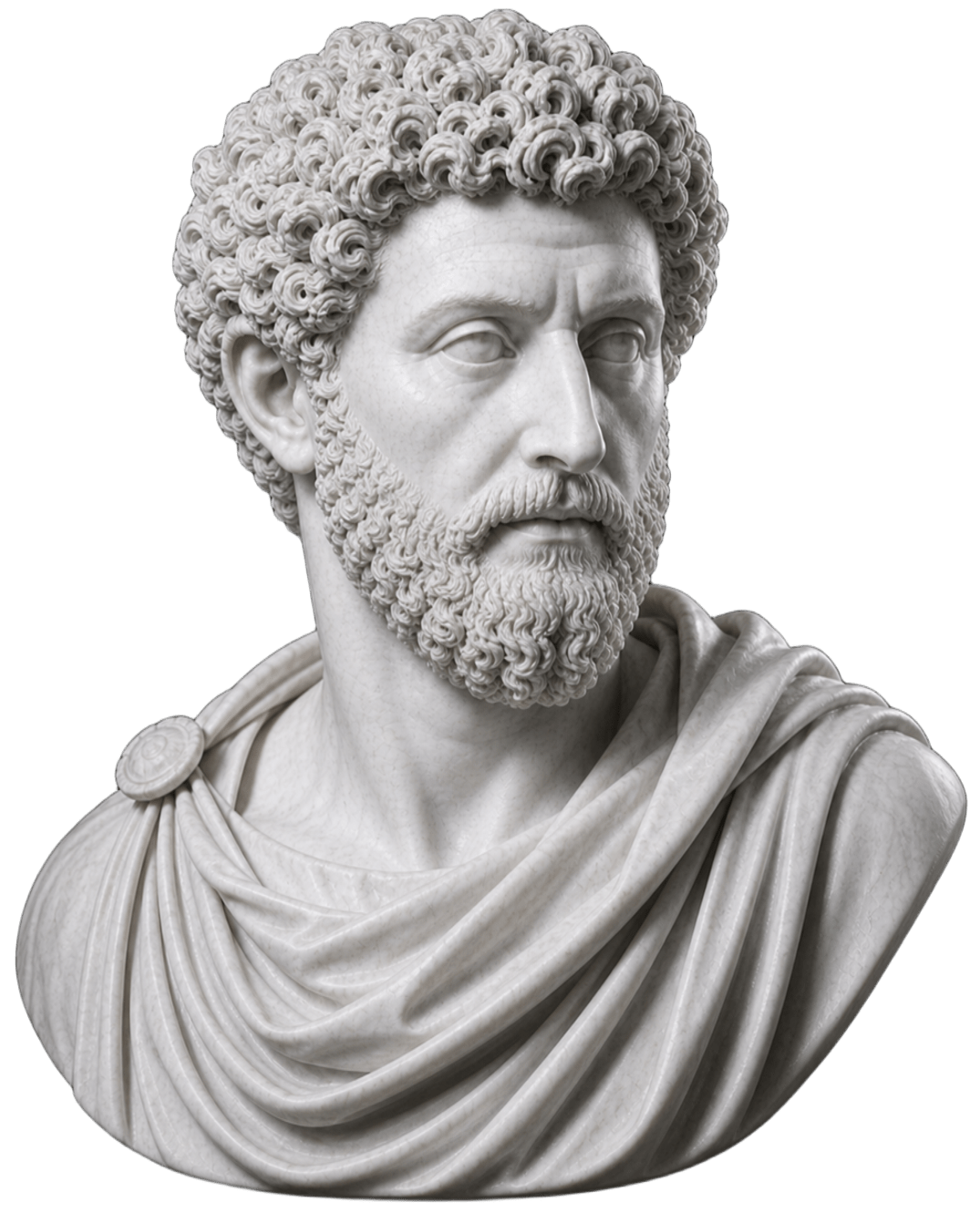
Marcus Aurelius
121 – 180
We find ourselves in this world without our consent, knowing nothing of where we are or how to live in it. Most of what we know we have learned from others. Turning to those who already confronted the questions we now face — many of them intrinsic to the human condition — is simply natural.
The structure
The shape of the model
Six layers descend from thinking to action. Thinking holds the unstructured stream of reflection from which belief itself crystallises. Three concepts cut across them all — Areas, Data, and Time & Space.
In practice
The dashboard
Where the model becomes everyday work — capture, plan, schedule, and review, all in one surface.
Each task sits inside the project, area, and goal it belongs to. The hierarchy stays visible underneath every line of work, so nothing floats free of intent.
The docs walk through every part. The demo lets you click through it.
“We are not inquiring in order to know what virtue is, but in order to become good.”
Tasks
Planned actions across all projects.
| Project | Due | |||||
|---|---|---|---|---|---|---|
| T-108 | Plan deep-work blocks for the week | |||||
| T-106 | Audit annual goals against beliefs | |||||
| T-105 | Reading notes: Spinoza ch. 2 | |||||
| T-104 | Reply to Anna | |||||
| T-103 | Strategy: portfolio siteOutline information architecture and content priorities. | |||||
| T-102 | Review Q1 goals |
6 tasks
Ariadne
The thread through the labyrinth of your mind.
Not intelligence for its own sake. As the thread led Theseus out of the maze, Ariadne takes everything you pour into your inbox and orders it by the criteria you already live by — read from how you run your own dashboard. The more you use it, the closer it gets to your judgement; reorganise your mind, and it follows.
Automating the sorting compounds. It tightens a loop that trains your own thinking to be clearer — and hands back the scarcest thing of all: room to think, and to make more than you could before.
Symposion · An invitation
The work is unfinished, the conversation open.
No life is ever a finished work. Discovering how to live well is an open project — the model gets clarified, the surfaces shaped, the questions sharpened, and then sharpened again.
And no life is built alone. The best questions, the best work, the best lives are made in the company of others who are also at it. If any of this resonated with youor stirred something — agreement, disagreement, a half-formed thought worth chasing — I'd like to hear from you. Seriously. Let's have a chat or grab a coffee, talk philosophy, discuss concepts and models, or maybe build something together.
“I am a lover of learning. The country places and the trees won't teach me anything — only the people in the city do.”